Hangzhou, China zpec@zju.edu.cn
Hangzhou, China zpec@zju.edu.cn

Biography: Johann W. Kolar is Professor Emeritus at ETH Zurich and former Head of its Power Electronic Systems Laboratory. He received his M.Sc. (1997) and Ph.D. (1999, summa cum laude) from the Vienna University of Technology (TU Wien). He introduced several breakthrough converter topologies, including the VIENNA Rectifier, Sparse Matrix Converter, and SWISS Rectifier, and made fundamental contributions to ultra-high-speed motor systems and automated multi-objective converter design. Since 2023, he has been a Specially Appointed Professor at the Nagasaki Institute of Applied Science, Japan, and since 2024 a Guest Professor at TU Wien, contributing to research and academic exchange in advanced power electronic systems. He has personally supervised 94 Ph.D. students to completion, authored more than 1,000 publications, and holds over 200 patents. His honors include the IEEE William E. Newell Power Electronics Award, the IEEE PELS R. David Middlebrook Achievement Award, the EPE Outstanding Achievement Award, and the 2025 IEEE Medal in Power Engineering. He is an IEEE Life Fellow, an International Member of the National Academy of Engineering, and a Fellow of the National Academy of Inventors. He has co-founded four ETH Zurich spin-offs and continues research in wide-bandgap power converters, artificial intelligence in power electronics, solid-state transformers, and life-cycle assessment of power electronics systems.
Abstract: Monolithic bidirectional switches (MBDSs) provide bidirectional current control and bipolar voltage blocking, enabling true AC-switch operation and driving the next generation of power electronic converters. They unlock substantially higher performance in applications ranging from grid interfaces for photovoltaic systems to EV chargers, datacenter power supplies, and AC/AC current-source motor drives with inherently sinusoidal output voltages. The talk presents novel converter topologies exploiting the unique capabilities of MBDSs and discusses the resulting significant advances over conventional approaches. Starting from diode-bridge rectification, non-isolated PFC rectifier topologies are systematically derived, highlighting their modulation, control, and semiconductor blocking-voltage requirements. The presentation then introduces quasi-single-stage isolated and single-stage matrix-type converters, building on the dual active bridge concept, and discusses the associated multi-step commutation strategies. Particular emphasis is placed on next-generation bidirectional EV on-board chargers, supporting both three-phase and single-phase AC operation, and future 99%-efficient datacenter AC/DC power-supply modules, demonstrating the substantial performance gains achievable with MBDSs. The keynote concludes with an outlook on higher levels of monolithic integration and future matrix-type AC/AC converter architectures, aimed at reducing commutation complexity and simplifying gate-drive implementation.

Biography: Jose Rodriguez received the Engineer degree in electrical engineering from the Universidad Tecnica Federico Santa Maria, in Valparaiso, Chile and the Dr.-Ing. degree in electrical engineering from the University of Erlangen, Erlangen, Germany. He has been professor and President of Universidad Tecnica Federico Santa Maria, Universidad Andres Bello and Universidad San Sebastian, all in Chile. Now, he is Director of the Center for Energy Transition at the University of San Sebastian in Santiago de Chile. He has coauthored two books, several book chapters and more than 1000 journal and conference papers. His main research interests include multilevel inverters, new converter topologies, control of power converters, and adjustable-speed drives. He has received a number of best paper awards from journals of the IEEE. Dr. Rodriguez is member of the Chilean Academy of Engineering. In 2014 he received the National Award of Applied Sciences and Technology from the government of Chile. In 2015 he received the Eugene Mittelmann Award from the Industrial Electronics Society of the IEEE. In years 2014 to 2025 he has been included in the list of Highly Cited Researchers published by Web of Science.
Abstract: Model Predictive Control (MPC) emerged years ago as an attractive control strategy for power electronics systems. Main advantages of MPC are the simple concept, the capability to include easily different control objectives and the high dynamic performance. On the contrary, like any new strategy, it also has disadvantages such as dependence on the mathematical model, dependence on the parameters and a variable frequency spectrum. However, thanks to the work carried out by the scientific community, most of these disadvantages has been resolved. This talk aims to introduce the audience to MPC and show them its evolution and applications. Special attention will be given to use of MPC in multilevel inverters using few calculations and how to avoid the use of weighting factors. The presentation will also present the evaluation to be used in electric vehicles. Finally, this talk will discuss the challenges that MPC must overcome to be adopted by the industry.
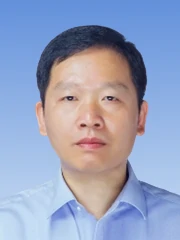
Biography: Xinbo Ruan received the B.S. and Ph.D. degrees in electrical engineering from Nanjing University of Aeronautics and Astronautics (NUAA), Nanjing, China, in 1991 and 1996, respectively. In 1996, he joined the Faculty of Electrical Engineering Teaching and Research Division, NUAA, where he became a Professor in the College of Automation Engineering in 2002. From August to October 2007, he was a Research Fellow in the Department of Electronic and Information Engineering, Hong Kong Polytechnic University, Hong Kong, China. From March 2008 to August 2011, he was also with the School of Electrical and Electronic Engineering, Huazhong University of Science and Technology, Wuhan, China. He is the author or co-author of 15 books and more than 300 technical papers published in journals and conferences. His main research interests include resonant and soft-switching power converters, power converter topologies and control, grid-connected converters and system for renewable energy, modeling and stability of power converters, and envelop tracking power supply. Prof. Ruan was a recipient of the Sustainable Energy Systems Technical Achievement Award from IEEE Power Electronics Society in 2022, the Delta Scholarship by the Delta Environment and Education Fund in 2003, and the Special Appointed Professor of the Chang Jiang Scholars Program by the Ministry of Education, China, in 2007. From 2005 to 2013, and from 2017 to 2025, he served as a Vice President of the China Power Supply Society. From 2014 to 2016, he served as a Vice Chair of the Technical Committee on Renewable Energy Systems within the IEEE Industrial Electronics Society. Currently, he serves as a Co-EIC for IEEE Transactions on Power Electronics, an Editor for IEEE Journal of Emerging and Selected Topics on Power Electronics, and an Associate for IEEE Open Journal of Industrial Electronics Society. He served as an Associate Editor for IEEE Transactions on Industrial Electronics (2011-2021) and IEEE Transactions on Circuits and Systems - II: Express Briefs (2016-2023). He was the General Chair of IPEMC-ECCE Asia 2020 and the General Secretary of IPEMC-ECCE Asia 2009, a Technical Program Committee Chair of the IEEE 7th Annual Energy Conversion Congress and Exposition (ECCE 2015), and a Tutorial Committee Chair of the IEEE 12th Annual Energy Conversion Congress and Exposition (ECCE 2020). He is an IEEE Fellow.
Abstract: Soft-switching techniques can greatly reduce the switching loss, thus improving the efficiency, power density, and reliability of power converters. Motivated by this, a family of full-range non-resonant PWM ZVS converters, including dc–dc, dc–ac, and ac–dc converters, is derived. The four-switch buck-boost (FSBB) converter is employed as an example to illustrate the proposed combined PWM and phase-shift control, by which zero-voltage-switching (ZVS) is realized with constant frequency in the full operation range while minimizing inductor current ripple. Inspired by this control scheme, the optimal operating modes for other full-range ZVS non-resonant PWM converters are also analyzed. Finally, the experimental results of the dc–dc converter, the dc–ac inverter, and the simulation results of ac–dc rectifier as an extension, are provided to verify the effectiveness of the non-resonant ZVS approach and generated converters.

Biography: Dr. Xing Huang is the Founder and Chairman of PNJ Semiconductor LLC, a leading Chinese wide-bandgap semiconductor company specializing in SiC power devices. He received his Ph.D. from North Carolina State University, where he was advised by Prof. B. Jayant Baliga (Inventor of the IGBT, IEEE Life Fellow) and Prof. Alex Q. Huang (Pioneer of Solid-State Transformer). With near two-decade experience in SiC/GaN R&D, Dr. Huang has been instrumental in advancing power devices for critical renewable applications. His research contributions include the invention of 10 kV+ bidirectional blocking SiC devices for AC smart grid fault protection and studies on SiC devices under extreme operation conditions. Under his leadership, PNJ Semiconductor has developed over 200 SiC products spanning 100 V to 6500 V, including MOSFETs, diodes, and JFETs. These products are now powering the global energy transition and have been deployed in over 5 million electric vehicles with zero field failures. The company's planar-gate SiC MOSFETs, featuring a 3.2 um cell pitch, SiC JFETs, and proprietary embedded PCB packaging technology (parasitic inductance < 3 nH) enable superior efficiency and reliability in applications including AI centers' HVDC power distribution, Solid-State Transformers (SST), and Solid-State Circuit Breakers (SSCB) for HVDC grid protection. PNJ manufactures in both Lubbock, TX, USA and Ningbo, Zhejiang, China, providing flexibility to serve global customers. Dr. Huang has published over 10 peer-reviewed papers (350+ citations) and holds 120+ patents.
Abstract: TBA
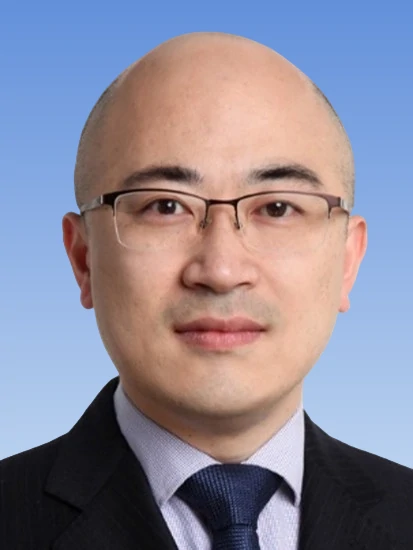
Biography: Rui Li received his M.S. and Ph.D. degrees from Nanjing University of Aeronautics and Astronautics (Nanjing, China) and Zhejiang University (Hangzhou, China), in 2005 and 2010, respectively. From 2008 to 2009, he was an Academic Guest at the Power Electronic Systems Laboratory, Swiss Federal Institute of Technology, Zurich, Switzerland. Between 2010 and 2012, he worked as a postdoctoral researcher in the Department of Electrical Engineering, Shanghai Jiao Tong University, Shanghai, China. From 2014 to 2015, he served as a postdoctoral researcher at the Center for Advanced Power Systems, Department of Electrical and Computer Engineering, College of Engineering, Florida State University, Tallahassee, FL, USA. Since 2012, he has been affiliated with the School of Electronics, Information and Electrical Engineering, Shanghai Jiao Tong University, Shanghai, China, where he was promoted to Professor in 2019. He has co-authored 3 books and over 100 technical papers in journals and conferences. His research interests mainly focus on power electronics applications in battery energy storage and renewable energy conversion. Dr. Li has received some academic honors, including the 2015 IEEE Power Electronics Society Transactions Second Prize Paper Award, the 2022 First Prize of Technological Invention from the China Power Supply Society, the 2023 Distinguished Young Scholar Award of the China Power Supply Society, and the 2024 Chang Jiang Scholars Distinguished Professor title awarded by the Ministry of Education of China.
Abstract: As battery energy storage systems continue to increase in capacity and voltage level, direct grid connection without a step-up transformer places higher requirements on system efficiency, SOC consistency, converter utilization, and battery-state awareness. Around these challenges, key technologies for high-voltage transformerless grid-tied battery energy storage systems are discussed from three closely related aspects: system-level balancing control, inter-cluster coordination for long-duration storage, and online impedance-based state reference. Based on a cascaded H-bridge architecture, battery clusters are connected to the medium/high-voltage grid through modular power conversion units. Under this architecture, SOC consistency and coordinated energy distribution among cascaded units become essential for stable and efficient operation. DC-side ripple suppression and filter optimization are briefly considered as practical design issues, while the main focus is placed on adaptive SOC balancing under battery current limits and converter modulation constraints, so as to improve available capacity and operating consistency. For long-duration energy storage, the mismatch between the rated power of H-bridge converters and the allowable output current of battery clusters further limits system utilization. Differences in capacity, internal resistance, and aging conditions may cause unequal current sharing, SOC-rate mismatch, additional circulation loss, and end-of-charge inconsistency during multi-cluster or multi-rack parallel operation. To address these issues, a low-loss inter-cluster balancing architecture based on series voltage compensation is developed. By inserting a small-capacity controllable voltage source in each cluster or rack branch, branch currents can be reshaped according to cluster states and parameter differences, enabling coordinated current sharing, faster SOC convergence, and improved capacity utilization with limited auxiliary converter power. Accurate battery-state information is also required to support the above balancing strategies. By utilizing the modular redundancy and controllability of the converter system, a modulation-based electrochemical impedance spectroscopy measurement method is established for normal operating conditions. Impedance information can be obtained with negligible disturbance to power conversion, and impedance features at selected frequency points are used for SOC and SOH estimation, especially in voltage-plateau regions where conventional voltage-based methods have limited sensitivity. Through the connection among system-level balancing, long-duration inter-cluster coordination, and online impedance-based state reference, an integrated technical route is formed for efficient, consistent, and reliable operation of scalable battery energy storage systems.
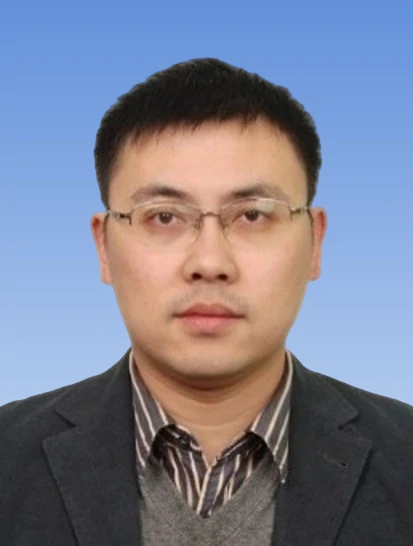
Biography: Min Chen received the B.S. degree in applied electronics and the Ph.D. degree in electrical engineering from Zhejiang University, Hangzhou, China, in 2000 and 2006, respectively. From 2007 to 2009, he was a Postdoctoral Researcher with the College of Electrical Engineering, Zhejiang University. He served as a Lecturer from 2010 to 2014, and was promoted to Associate Professor in 2014. During 2014 to 2015, he was a Visiting Researcher with the Department of Energy Technology, Aalborg University, Denmark. Since 2020, he has been a Full Professor with Zhejiang University. He currently serves as the Deputy Director of the National Key Laboratory of Power Electronics. His research interests include the packaging of wide-bandgap power devices, renewable generation & grid integration, and bidirectional charging/discharging for EVs & energy storage. He has published over 100 SCI/EI indexed papers, including one ESI Highly Cited Paper, and holds 55 Chinese invention patents and 5 overseas patents. He has led multiple research projects funded by the National Natural Science Foundation of China (NSFC) and participated in several National Key R&D Programs.
Abstract: Silicon carbide (SiC) wide-bandgap semiconductor devices exhibit tremendous potential in high-performance, high-power-density applications such as electric vehicles and data centers. However, conventional packaging structures widely used for Si devices fail to fully exploit the superior performance of SiC devices due to high parasitic parameters and a single heat-dissipation path. These limitations have severely restricted the further development and application of SiC devices. Embedded packaging technology has attracted increasing research attention in recent years as a promising solution. This presentation focuses on the current development status and key challenges of embedded packaging technology, introducing its structural design, key manufacturing processes, and integrated thermal management methods. In addition, the presentation further discusses the application prospects of embedded packaging in areas such as electric vehicle drive systems, and provides an outlook on future development trends and research directions.
