Hangzhou, China zpec@zju.edu.cn
Hangzhou, China zpec@zju.edu.cn
The rapid escalation of AI workloads is giving rise to gigawatt-scale data centers, pushing conventional power delivery architectures to their physical and economic limits. Solid-state transformers (SSTs) have emerged as a compelling contender, promising unprecedented power density, native multi-port DC integration for renewables and storage, and dynamic grid support. Yet, formidable challenges in cost, reliability, and system-level maturity persist. This panel convenes world-renowned academic pioneers and industry leaders to engage in a critical, unvarnished discussion. We will rigorously examine whether SSTs are truly destined to be the unique backbone of future AI power systems, or if they will coexist within a diverse ecosystem of evolving architectures. The discussion will dive deep into the technical bottlenecks, reliability requirements, and realistic deployment timelines that will ultimately determine the fate of SSTs in this critical application.
 Photo';">
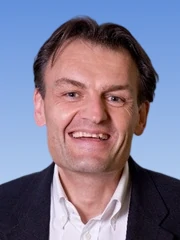
Johann W. Kolar
Swiss Federal Institute of Technology, Switzerland
Johann W. Kolar is Professor Emeritus at ETH Zurich and former Head of its Power Electronic Systems Laboratory. He received his M.Sc. (1997) and Ph.D. (1999, summa cum laude) from the Vienna University of Technology (TU Wien). He introduced several breakthrough converter topologies, including the VIENNA Rectifier, Sparse Matrix Converter, and SWISS Rectifier, and made fundamental contributions to ultra-high-speed motor systems and automated multi-objective converter design. Since 2023, he has been a Specially Appointed Professor at the Nagasaki Institute of Applied Science, Japan, and since 2024 a Guest Professor at TU Wien, contributing to research and academic exchange in advanced power electronic systems. He has personally supervised 94 Ph.D. students to completion, authored more than 1,000 publications, and holds over 200 patents. His honors include the IEEE William E. Newell Power Electronics Award, the IEEE PELS R. David Middlebrook Achievement Award, the EPE Outstanding Achievement Award, and the 2025 IEEE Medal in Power Engineering. He is an IEEE Life Fellow, an International Member of the National Academy of Engineering, and a Fellow of the National Academy of Inventors. He has co-founded four ETH Zurich spin-offs and continues research in wide-bandgap power converters, artificial intelligence in power electronics, solid-state transformers, and life-cycle assessment of power electronics systems.
 Photo';">
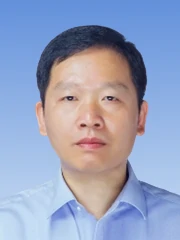
Xinbo Ruan
Nanjing University of Aeronautics and Astronautics, China
Xinbo Ruan received the B.S. and Ph.D. degrees in electrical engineering from Nanjing University of Aeronautics and Astronautics (NUAA), Nanjing, China, in 1991 and 1996, respectively. In 1996, he joined the Faculty of Electrical Engineering Teaching and Research Division, NUAA, where he became a Professor in the College of Automation Engineering in 2002. From August to October 2007, he was a Research Fellow in the Department of Electronic and Information Engineering, Hong Kong Polytechnic University, Hong Kong, China. From March 2008 to August 2011, he was also with the School of Electrical and Electronic Engineering, Huazhong University of Science and Technology, Wuhan, China. He is the author or co-author of 15 books and more than 300 technical papers published in journals and conferences. His main research interests include resonant and soft-switching power converters, power converter topologies and control, grid-connected converters and system for renewable energy, modeling and stability of power converters, and envelop tracking power supply. Prof. Ruan was a recipient of the Sustainable Energy Systems Technical Achievement Award from IEEE Power Electronics Society in 2022, the Delta Scholarship by the Delta Environment and Education Fund in 2003, and the Special Appointed Professor of the Chang Jiang Scholars Program by the Ministry of Education, China, in 2007. From 2005 to 2013, and from 2017 to 2025, he served as a Vice President of the China Power Supply Society. From 2014 to 2016, he served as a Vice Chair of the Technical Committee on Renewable Energy Systems within the IEEE Industrial Electronics Society. Currently, he serves as a Co-EIC for IEEE Transactions on Power Electronics, an Editor for IEEE Journal of Emerging and Selected Topics on Power Electronics, and an Associate for IEEE Open Journal of Industrial Electronics Society. He served as an Associate Editor for IEEE Transactions on Industrial Electronics (2011-2021) and IEEE Transactions on Circuits and Systems - II: Express Briefs (2016-2023). He was the General Chair of IPEMC-ECCE Asia 2020 and the General Secretary of IPEMC-ECCE Asia 2009, a Technical Program Committee Chair of the IEEE 7th Annual Energy Conversion Congress and Exposition (ECCE 2015), and a Tutorial Committee Chair of the IEEE 12th Annual Energy Conversion Congress and Exposition (ECCE 2020). He is an IEEE Fellow.
 Photo';">
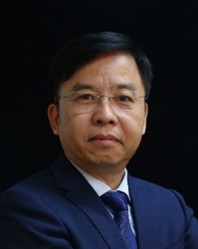
Alpha J. Zhang
Delta Electronics Inc., China
Dr. Alpha J. Zhang was an associate professor in the Electrical Engineering Department at Zhejiang University from 1991 to 1998. He served as a visiting professor at the Center for Power Electronics Systems (CPES), Virginia Tech, USA, in 1995 and 1998. In 1999, he joined Delta Electronics (Shanghai) Co., Ltd. He is the founder and Director of the Delta Electronics (Shanghai) Design Center (SDC), established in 2002, and the Delta Electronics (Hangzhou) Design Center (HDC), founded in 2007. Under his leadership, multi-disciplinary R&D teams of over 1,000 engineers have supported 15 Delta business units in serving customers worldwide. His expertise spans AC/DC adapters and chargers, High-efficiency DC/DC and AC/DC power converters for servers and networking systems, HVDC power solutions for data center systems, On-board chargers and traction inverters for electric vehicles, PV inverters and energy storage solutions for renewable energy systems, among others. He holds 108 U.S. patents and 133 Chinese patents. Currently, he serves as Vice President of the China Power Supply Society (CPSS) and is a Fellow of both CPSS and IEEE (since 2025).
 Photo';">
Yanhua Lin
Alibaba, China
Yanhua Lin is a Senior Power Architect at Alibaba Cloud Infrastructure, based in Hangzhou, China. With over 7 years of industry experience, she leads the full lifecycle development of power systems for hyperscale AI data centers, covering architecture planning, product R&D, large-scale deployment and operation optimization. Her core expertise lies in high-efficiency power conversion and distribution technologies, including DC UPS platforms, high-voltage DC systems and solid-state transformer (SST). She spearheaded the development of the 2.5 MW DC UPS 2.0 platform, which achieves ≥97.5% end-to-end efficiency, cuts equipment cost and electrical room footprint by 50% compared with traditional AC/UPS architectures, and supports seamless voltage evolution from DC240V up to DC800V. For AI data center scenarios, she designed the BR power architecture that lifts facility utilization to over 85% while meeting GB50174 Class A availability standards, enabling rapid construction of 100,000-GPU scale clusters. She also leads frontier R&D on SiC/GaN-based SST and high-efficiency DC STS technology for next-generation power distribution. Ms. Lin holds an M.S. in Electrical Engineering from Beijing Jiaotong University and a B.Eng. in Electrical Engineering and Automation from Beijing University of Civil Engineering and Architecture.
Artificial intelligence (AI) and machine learning are rapidly transforming energy systems as well as modern power electronics, opening new frontiers in control, diagnostics, and system optimization. However, bridging the gap between theoretical AI models and real-world grid reliability, and also power electronics dynamics, presents fundamental engineering challenges. This panel session brings together leading international experts to critically examine where AI delivers actionable value in power electronics—and where traditional physics-based engineering remains irreplaceable.
The session opens with three complementary perspectives:
It is expected that this interactive panel will engage the audience in a forward-looking dialogue on the realistic role of artificial intelligence in shaping the next generation of resilient, intelligent power systems.
 Photo';">
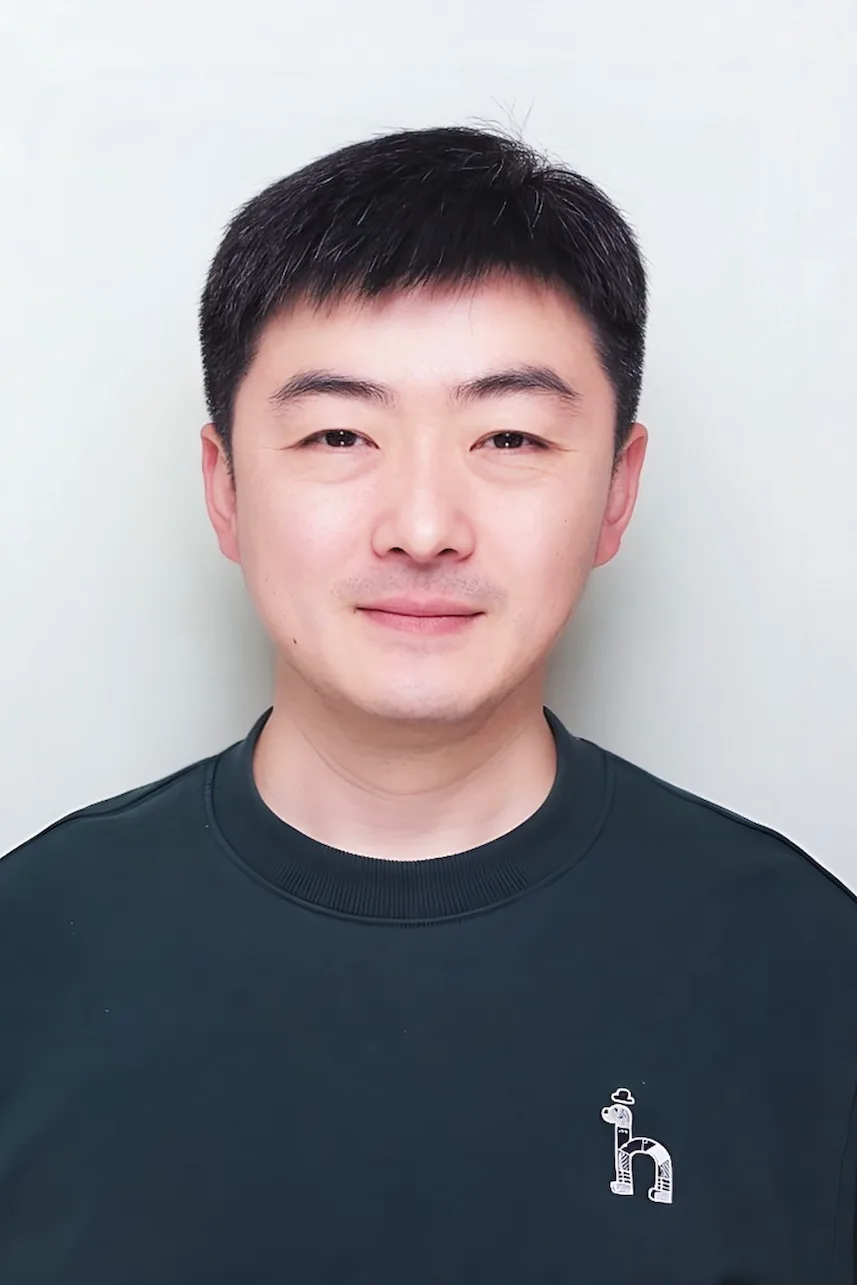
Feng Gao
Shandong University, China
Prof. Gao received the B.Eng. and M.Eng. degrees in electrical engineering from Shandong University, Jinan, China, in 2002 and 2005, respectively, and the Ph.D. degree from the School of Electrical and Electronic Engineering, Nanyang Technological University, Singapore, in 2009. Since 2010, he has been with Shandong University, where he is currently a Professor with the School of Control Science and Engineering.
 Photo';">
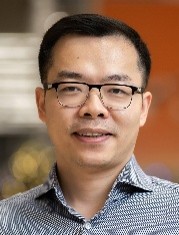
Huai Wang
Aalborg University, Denmark
Huai Wang is a Professor at the Department of Energy (AAU Energy), Aalborg University, Denmark. He leads the Reliability of Power Electronic Converters (ReliaPEC) group and chairs the Mission of Digital Transformation and AI at AAU Energy. His research focuses on efficient, reliable, and cognitive power electronic components and converter systems. He has initiated five industrial/PhD courses, attended by over 1,000 PhD students and industry engineers, and delivered more than 30 international conference tutorials. He received his PhD from the City University of Hong Kong in 2012 and a B.E. degree from Huazhong University of Science and Technology in 2007. He was elected to the Danish Academy of Technical Sciences in 2023.
 Photo';">
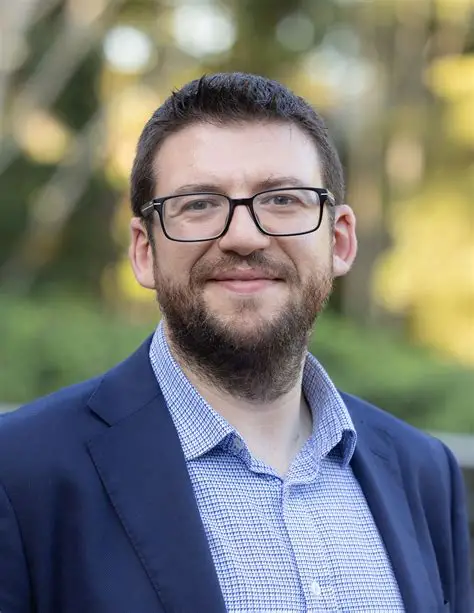
Georgios Konstantinou
The University of New South Wales, Australia
Georgios Konstantinou is an Associate Professor and an ARC Future Fellow with the School of Electrical Engineering and Telecommunications at UNSW Sydney, where he leads the real-time simulations laboratory (RTS@UNSW).
