Hangzhou, China zpec@zju.edu.cn
Hangzhou, China zpec@zju.edu.cn
Inside the Solid State Transformers
Solid State Transformers technology continues to excite researchers in academia and industry. Despite many promises of power-dense high-performance conversion, there are significant challenges encountered in the practical design of these highly modular, galvanically isolated power electronics converters. These stem from high power and high voltage aspects of design, insulation coordination, high voltage magnetic components, thermal aspects, and the complexity of controller hardware and control algorithms. High modularity strongly impacts the reliability and availability of the SST as a whole and has a strong impact on the scalability in terms of voltage, current, and power ratings. Redundancy in design is often adopted, further complicating the realizations of power stages.
The tutorial will systematically address numerous technological aspects inside the MW-level SST design, present commonly used technologies, as well as some first-hand experiences and solutions used or developed at the Power Electronics Laboratory at EPFL, by the instructors. When appropriate, PLECS models and simulations will be used to support the introduced concepts and methods to the audience.
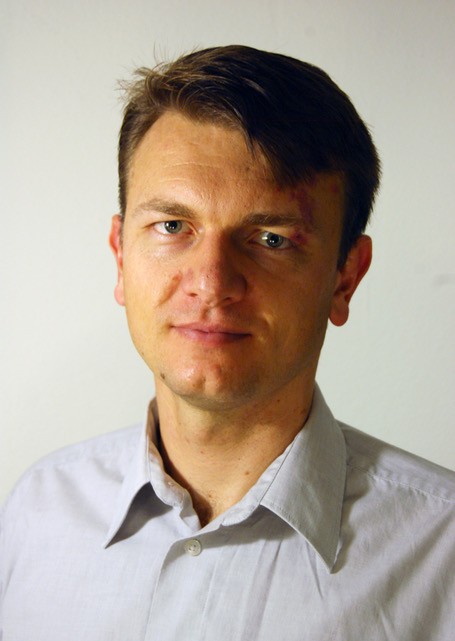 Photo';">
Drazen Dujic
Power Electronics Laboratory, EPFL
Drazen Dujic is an Associate Professor and Director of the Power Electronics Laboratory at the Swiss Federal Institute of Technology (EPFL) in Lausanne, Switzerland. Upon obtaining his PhD degree in 2008, he spent 5 years in industry (with ABB Switzerland) and joined EPFL in 2014. His research interests are mainly in medium-voltage high-power electronics. He has given numerous keynotes and tutorials on the topics of modular multilevel converters, medium-frequency transformer design and optimization, and solid-state transformers. He is an IEEE Fellow.
 Photo';">
Zhenchao Li
Power Electronics Laboratory, EPFL
Zhenchao Li is currently a Ph.D. student at the Power Electronics Laboratory of the Swiss Federal Institute of Technology (EPFL) in Lausanne, Switzerland. His PhD research projects is directly related to the Solid-State Transformer technologies for data center applications.
Outline and Schedule (3-hour duration)
| Duration | Topic | Presenter |
|---|---|---|
| 90 min | Part 1: SST Technology Overview and Design Challenges | Drazen Dujic |
| 15 min | Coffee Break | — |
| 90 min | Part 2: Advanced SST Design Considerations | Drazen Dujic, Zhenchao Li |
| 15 min | Summary and Conclusions | Drazen Dujic |
Part 1: SST Technology Overview and Design Challenges (90 minutes)
Part 2: Advanced SST Design Considerations (90 minutes)
Summary and Conclusions (15 minutes)
Final remarks summarizing key takeaways from the tutorial, highlighting the most critical design considerations and future trends in Solid State Transformer technology.
Tutorial Style and Requirements:
